Plastic Pollution Awareness: Why We Must Reduce Single-Use Plastic
Plastic is everywhere. From the bags we carry and the bottles we drink from to the packaging used for our food, plastic has become a regular part of modern life.
Although plastic offers convenience, the way we use and dispose of it creates a serious environmental challenge. Many plastic products are used for just a few minutes but can remain in the environment for decades or longer.
The good news is that we can make a difference. By understanding the impact of plastic pollution and making conscious choices, we can help create a cleaner and healthier future.
What Is Plastic Pollution?
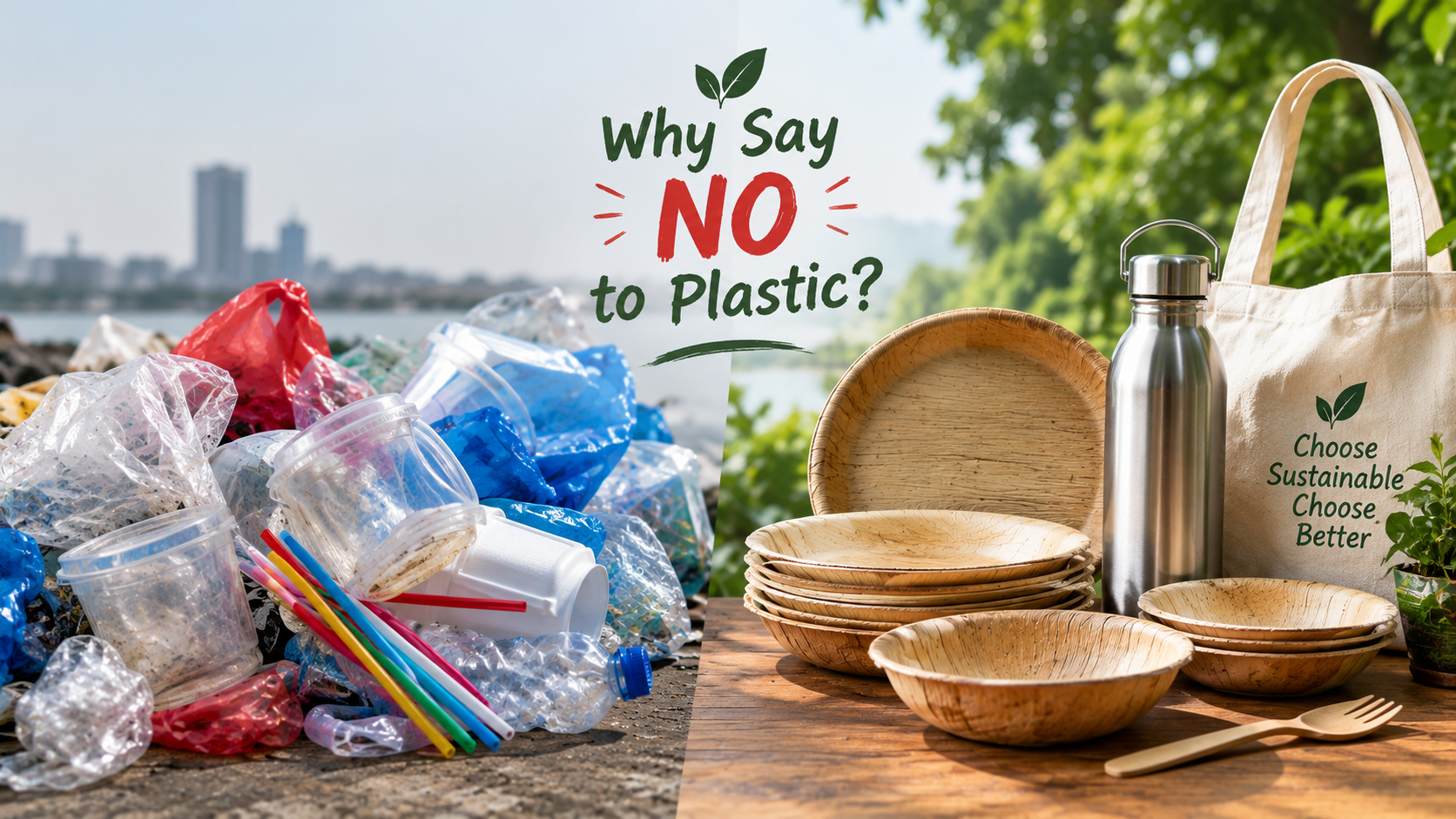
Plastic pollution occurs when plastic waste accumulates in our environment, including on land, in rivers, in oceans and in other natural habitats.
A major contributor is single-use plastic — products designed to be used once or for a short period before being thrown away.
Common examples include:
- Plastic carry bags
- Disposable cups, plates and cutlery
- Plastic straws and food packaging
- Single-use water bottles
- Plastic wrappers and containers
When plastic waste is not properly collected and managed, it can spread through streets, drains, rivers and natural ecosystems.
Why Is Plastic Pollution a Serious Problem?
- It harms wildlife and marine life
Animals can mistake plastic waste for food or become entangled in discarded bags, strings and packaging. This can cause injuries, suffering and even death.
Plastic waste entering rivers and oceans also threatens aquatic ecosystems.
- It pollutes our land and water
Discarded plastic can accumulate in public spaces, agricultural areas, lakes and rivers. Over time, larger plastic items can break into smaller pieces called microplastics.
Microplastics have been found in many environmental settings, raising concerns about their effects on ecosystems and human exposure.
- It creates waste-management challenges
Plastic litter can clog drains and contribute to waterlogging. Lightweight plastic bags and wrappers are particularly difficult to collect once they scatter across an area.
Reducing unnecessary plastic use helps prevent waste before it becomes a disposal problem.
- It contributes to environmental damage
Most conventional plastics are made from fossil-based resources. Producing, transporting and disposing of them can generate greenhouse gas emissions.
Reducing unnecessary consumption and choosing reusable products can help lower our environmental footprint.
Why Is Single-Use Plastic So Common?
Single-use plastic is popular because it is lightweight, inexpensive, convenient and widely available.
Food businesses often use plastic packaging because it can be economical and easy to store. Consumers may also choose disposable products without considering what happens after they are thrown away.
However, convenience should not be the only factor in our decisions. We should also consider the resources used to make a product, how long it is used and what happens when we no longer need it.
7 Simple Ways to Reduce Plastic Use in Everyday Life
- Carry a reusable shopping bag
Keep a cloth or other durable reusable bag with you when shopping. Reusing the same bag can reduce your dependence on disposable carry bags.
- Choose a reusable water bottle
A durable steel or other suitable reusable bottle can replace many single-use plastic bottles over time.
- Avoid unnecessary disposable cutlery
When practical, carry reusable spoons, forks and other utensils instead of accepting disposable ones with every takeaway order.
- Make conscious food-packaging choices
For takeaway meals, explore suitable alternatives to conventional plastic packaging. Depending on the food and its requirements, options may include paper-based containers, bagasse containers and areca leaf plates.
Always check that packaging is appropriate for the food, moisture, temperature and intended use.
- Say no to unnecessary straws and accessories
If you do not need a straw, plastic spoon or extra packaging, politely decline it.
Small decisions become meaningful when many people make them regularly.
- Reuse products whenever it is safe and practical
Before throwing something away, consider whether it can be reused for its intended purpose. Reuse can reduce demand for new products and help prevent waste.
Avoid reusing food-contact packaging if it is not designed for repeated use.
- Segregate and dispose of waste responsibly
Separate waste according to your local waste-management rules. Keep recyclable plastic clean where required and use appropriate collection systems.
Remember that recycling is important, but preventing unnecessary waste is even better.
Eco-Friendly Alternatives to Common Single-Use Plastics
The right alternative depends on the product, how it is used and how it will be disposed of.
Conventional product| Alternative to consider
Disposable plastic shopping bags| Reusable cloth bags
Single-use plastic bottles| Reusable steel bottles
Plastic plates| Reusable plates or areca leaf plates
Plastic food containers| Suitable paper-based or bagasse containers
Disposable plastic cutlery| Reusable steel or wooden cutlery, where appropriate
Plastic straws| No straw when unnecessary, or a suitable alternative
Important: No alternative is automatically impact-free. Reusable products should be used repeatedly, while compostable or biodegradable products need appropriate disposal conditions. Check product claims and local waste-management facilities before choosing an alternative.
How Can Restaurants and Food Businesses Help?
Restaurants, cafés, street-food vendors and takeaway businesses can play an important role in reducing unnecessary plastic waste.
Here are a few practical steps businesses can take:
- Review the disposable packaging used for takeaway orders.
- Avoid unnecessary plastic cutlery and accessories.
- Evaluate paper-based, bagasse or areca leaf products for suitable applications.
- Choose packaging that meets food-safety and performance requirements.
- Inform customers about responsible waste disposal.
- Reduce excess packaging wherever possible.
Businesses should compare cost, durability, food safety, customer convenience and end-of-life disposal before switching products.
A thoughtful transition can help businesses respond to growing interest in responsible consumption while reducing unnecessary waste.
Are Biodegradable Products a Better Choice?
Biodegradable products are designed to break down through biological processes under suitable conditions. However, the time and conditions required can vary significantly between materials.
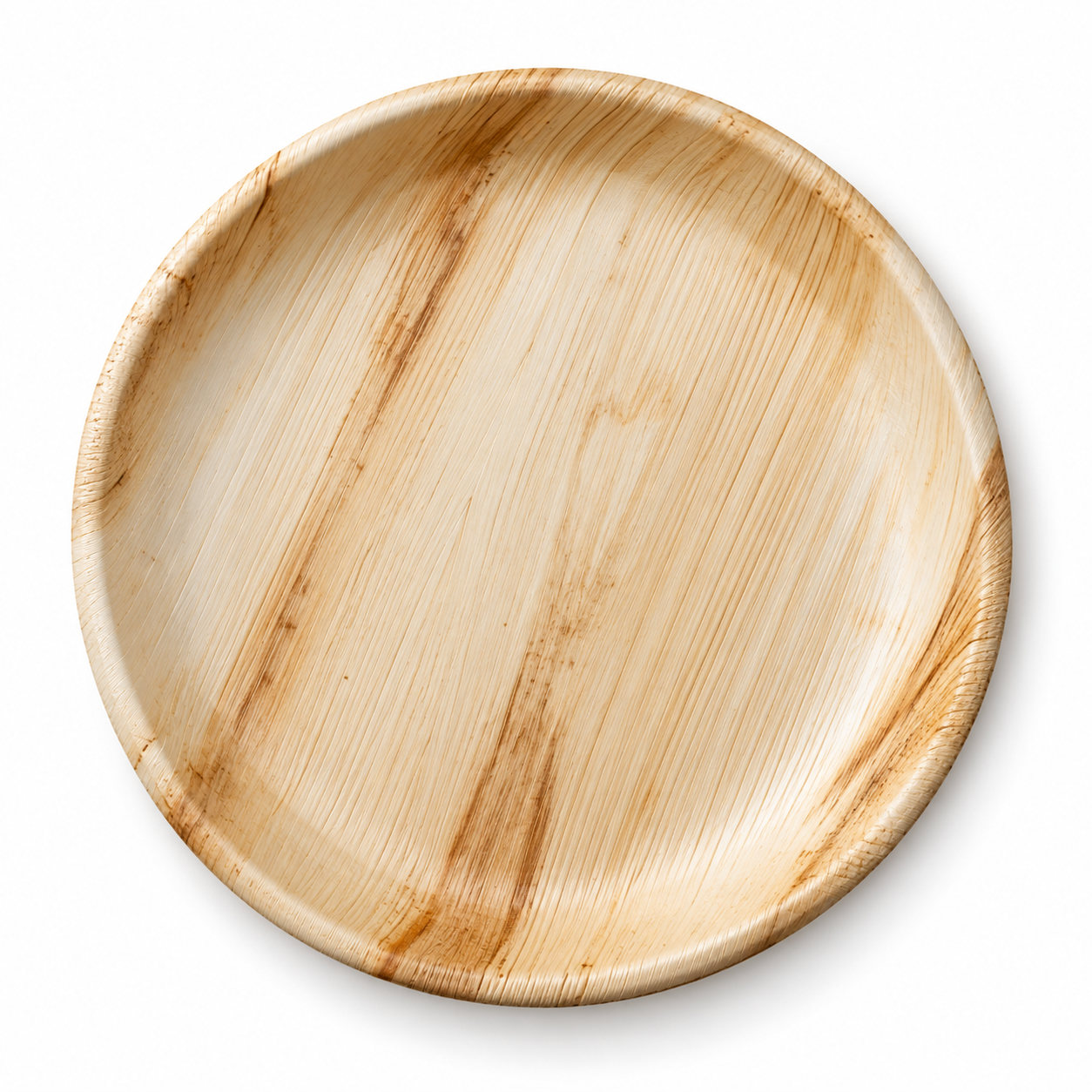
For example, areca leaf plates use fallen areca palm leaf sheaths, while bagasse products are made from the fibrous residue left after sugarcane juice extraction.
These materials can offer alternatives to certain conventional disposable plastic products. However, their overall environmental benefits depend on manufacturing, transport, product performance and disposal conditions.
Do not assume that every product labelled “biodegradable” or “compostable” will break down quickly in any environment. Look for credible product information and follow local disposal guidance.
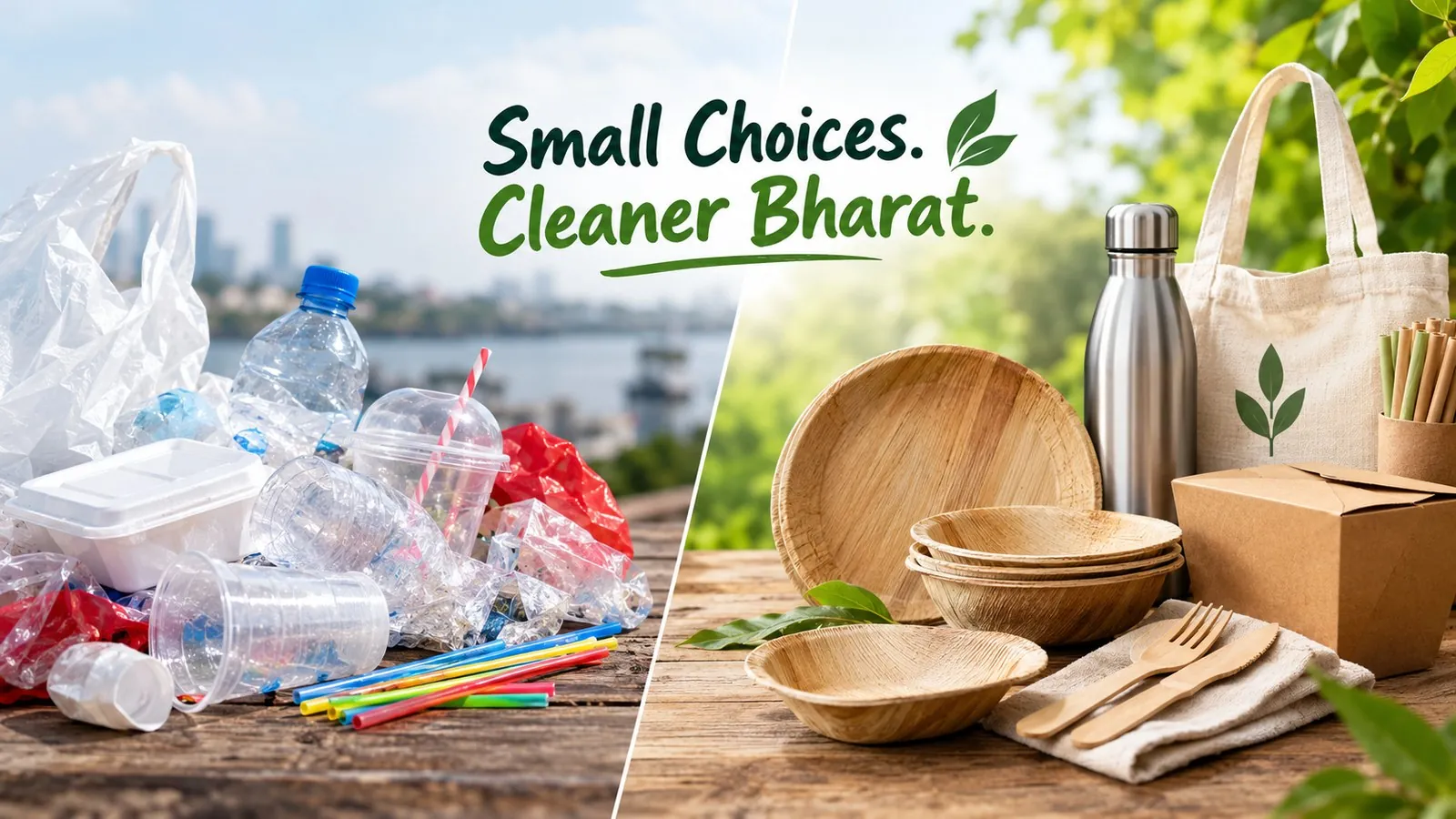
Building a Cleaner Bharat Starts With Us
Plastic pollution is not only a government or business problem. It is a shared responsibility.
Households can reduce unnecessary consumption. Schools can spread awareness. Communities can organise clean-up drives. Restaurants can review their packaging choices. Businesses can develop and offer more responsible alternatives.
We do not need to change everything overnight. We can start by replacing one disposable habit, making more informed purchases and encouraging others to do the same.
Every choice is an opportunity to rethink what we use and what we leave behind.
Our Commitment at BharatAum
At BharatAum, we believe everyday products should be chosen thoughtfully, with greater awareness of their impact on our surroundings.
Our vision is to support a cleaner Bharat by exploring practical alternatives to conventional plastic products, including areca leaf tableware and suitable paper-based and bagasse food packaging.
We believe that awareness comes first. When people understand the consequences of their choices, they can make better decisions for their homes, businesses and communities.
Our goal is simple: to encourage more responsible everyday choices and make suitable eco-conscious alternatives easier to discover.
Frequently Asked Questions
Why should we reduce single-use plastic?
Reducing single-use plastic helps prevent litter, lowers demand for newly manufactured plastic and can reduce the amount of waste that needs to be managed.
What are some alternatives to disposable plastic plates?
Reusable plates are a good option where practical. Areca leaf plates and suitable bagasse-based products can also be considered for disposable food-service applications.
Are paper containers better than plastic containers?
It depends on how the containers are manufactured, whether they contain plastic linings, how well they perform and how they are disposed of. Choose products suitable for the intended use and available waste-management systems.
Can biodegradable products be thrown anywhere?
No. Biodegradable products should not be littered. They need suitable disposal conditions, and some require industrial composting or other specific treatment.
How can I start reducing plastic use today?
Carry a reusable bag, use a refillable bottle, decline unnecessary disposable accessories and make informed choices about food packaging.
Conclusion
A cleaner environment begins with awareness, followed by consistent action. By reducing unnecessary single-use plastic, choosing reusable products and exploring suitable alternatives, we can all contribute to a more responsible future.
Use thoughtfully. Waste less. Build a cleaner Bharat.
BharatAum — Thoughtfully Better Everyday Products.